A dowry is the money, goods, or estate that a woman brings to her husband in marriage.
The giving of dowries is an extremely old practice that is thought to predate writing. While not very common in this time period this practice still exists in several places. Similar practices exist that are not called dowry. Take for example in the USA it is customary for the bride's family to pay for the wedding; some people view this as being a dowry.
A country that still has the practice of giving dowries is Japan. It is not uncommon for the parents to give a dowry of some type. A famous example would be Princess Sayako who in 2005 left the Japanese royal family and becomes a commoner through marriage. The Japanese government gave Princess Sayako 152.5 million yen upon her marriage as a dowry (the legal limit according to imperial law).
I have made some attempt to learn about dowries in Japan with little success (though there is also a similar practice called Yuinou (or Yuino) where the two families exchange betrothal gifts). The reason I have attempted to find out info on them is because a couple characters in Ranma 1/2 have dowries most importantly Ukyo. Some people claim that Ukyo's engagement is invalid because she gambled away her dowry prior to Ranma's father stealing it. The thing is a dowry is not needed or required for an engagement/marriage. Having one and the size of the dowry does show how wealthy/important the girl is but it really does not matter for the engagements/marriages at all. A dowry does not really go to the guy/his family. What a dowry really is is the girls inheritance meant for taking care of her and her children. The girl generally becomes part of the new family (transferred from her family registry to his) and it is a means of giving her inheritance to her. From what I read in the case of the girl dying without having children or divorce it's customary to give the dowry back to her family. Of course I can find very little on modern dowries except that they still exist even though they are of less importance. Most of what I found was about them in Edo Japan (if I find out more I will likely edit this post).
Showing posts with label Japanese Culture. Show all posts
Showing posts with label Japanese Culture. Show all posts
Saturday, May 22, 2010


Wednesday, September 16, 2009
Yobai - Night Crawling
 I made mention of the practice of Yobai in a post on sneak masks last year. Yobai is an old custom in Japan in which a man would visit a woman at night to have sex. The practice went like this: A young woman would be sleeping in her room and a guy would creep in, slide behind her, and make his intentions known. If she consented, they would have discrete sex through the night, with him then slipping out of the house stealthily before anyone woke up. While sometimes it was just a sexual romp, quite often the girls family would know about it. It was occasionally seen as a prelude to marriage, the first few nights a young man secretly visited their daughter the family would pretend nothing happened, then they would catch him and a public courtship would begin. This practice would also occur between married couples as it was not unusual for wives to continue to live with their parents.
This practice is now seen as an immoral one and for the most part is not done, several decades ago it was still done in some rural areas, but was not common. It has not died out entirely though. The seduction of sleeping women is a common theme of Japanese pornography and some places offer yobai services (prostitutes who pretend to be asleep while the client slips into their futon). Yobai can be seen in Japanese literary works like The Tale of Genji. It also is sometimes mentioned in manga and anime, for example in the Ah! My Goddess TV series Keiichi approaches Belldandy's room wondering if he is doing a form of yobai.
Additional trivia:
- A night crawling man would often wear a tenugui (cotton cloth) over part of his face. In part to protect his identity if she rejected his advances and so that she could honestly state that he was wearing a mask (therefor she is unable to identify him).
- A technique to help avoid detection that was used, was to urinate along the bottom of doors to prevent them from squeaking as they were slid open.
- Sometimes the guy would take his clothes off before even sneaking into the house. This was done so that the person, if caught, would not be mistaken for a burglar (this was legal sometimes and places, theft still wasn't).
- Originally the term came from the verb yobu, meaning to visit. Overtime it came to be written with the kanji for night and crawl.
Obligatory Ranma reference (seeing as to how that is a theme of this blog). In the second volume of the manga (VIZ count), Ranma sneaks into Akane's room because Ryoga in pig form is sleeping with Akane. Everyone in the house thinks that Ranma's attempting Yobai. The comments all support this with Nabiki saying to do it quietly, Soun saying it shows Ranma's healthy, and Kasumi thinking it is not right to do.
Monday, September 7, 2009
Dōjinshi
Admitting I read dōjinshi (Japanese fan made and published comics akin to fan fiction), much less commenting on them, is not something I do very often. While there are some very good non-hentai dōjinshi, they are not anywhere as easy to find (the series in which I have seen the most non-hentai and good dōjinshi is Slayers). The reason for this is because most dōjinshi are of the Hentai variety, at least most dōjinshi that get posted on the internet are, and have either no plots or very weak plots. There are very good quality dojinshi, even of the hentai variety, quite a few mangaka started out as dōjinshi writers or write dōjinshi on the side. Ken Akamatsu (Love Hina), Rikdo Koshi (Excel Saga), Kiyohiko Azuma (Azumanga Daioh) and Masaki Kajishima (Tenchi Muyo) all wrote dōjinshi prior to becoming mangaka. Some still do like Masaki Kajishima, he writes mostly Tenchi Muyo dōjinshi that is supplementary to the series.
Writing fan made comics is not unique to the Japanese. The biggest difference is that they are more illegal in some places, like the USA, because of copyright laws. The Japanese copyright laws are not as stringent and the industry allows the publishing of dōjinshi (they even have large conventions for dōjinshi).
Some particularly popular anime/manga spawn webcomics (which are for all practical purposes the same as dōjinshi, just not produced in Japan). Two examples are: Sailor Ranko (a fukufic i.e. Ranma/Sailormoon crossover - an alright but not great fan comic) and Slayers Hamlet (Shakespeare's Hamlet with the Slayers cast - a most excellent but sadly not updated in several years webcomic).
A few good dōjinshi are:
-Evangelion Re-Take, which has both a hentai version and a non-hentai version. This has a very good plot.
-Blackdogs Sailormoon dōjinshi, which are hentai and have very little plot but are drawn very well. They can be found at Sailormoon.biz along with a few hundred other sailormoon dōjinshi.
-There are quite a few Slayers dōjinshi that are not hentai, mostly WAFF (warm and fuzzy feeling). I 'd link to them but most of the links to them that I have are non functional and I know not where to find them anymore. The only links in my bookmarks that still works are this Fortuncity site Isabel's fanworks corner, but it registers as a dangerous site according to firefox, QP House which has a few dōjinshi as well as summaries of the Slayers Novels, and Slayers Doujin fan share which has quite a few. I also know of this site which has Hentai and Yaoi pairings but the hentai in general isn't that good and Yaoi disgusts me.
- The Original Dirty Pair / Lovely Angels Shrine has quite a few Dirty Pair things like an entire novel and several dōjinshi the best though is listed under fanmade comics and is a Ranma/Dirty Pair crossover.
-There are a few good Ranma dōjinshi but I don't have a list of links at this time, the sites that had them generally do not have them anymore.
I request of any reader of this to suggest some good dōjinshi in the comments (Hentai variety is acceptable, but please mention that it is) and links to it would be appreciated.
addon: 6/4/10
Turtle Paradise Scanlations, that has several doujinshi including a couple Slayers doujinshi (as well as several Slayers manga scanlations). I've yet to read any of those manga or doujinshi so I can't say how good they are. Though I have read and own several other Slayers manga and enjoyed them so hopefully I'll enjoy these as well. I'm somewhat surprised I hadn't found them earlier but seeing as to how I haven't been reading or looking for Slayers stuff recently I'm not that surprised.
addon: 8/9/10
The website Realm of Sailor Energy has some amusing comics on it.
The Fancomic Central livejournal has links to numerous fan comics.
Wednesday, September 2, 2009
Dojo Yaburi
Several characters in the Ranma manga are Dojo Yaburi - Dojo Challengers. The most remembered one is the one with his own story arc but there were others Ryoga did so when he had the mark of the gods, Ryu Kumon was one, Ranma may have been one prior to coming to the Tendo's, and the Tendo's openly display a sign inviting anyone to challenge their dojo.
While not all that uncommon in fighting manga/anime and martial arts movies (there even is a movie with Dojo Yaburi as it's title - I haven't seen it) in real life it is an outdated practice. It was at one time pretty common. An example of a real person who was a dojo destroyer is Souke Teruo Hayashi the founder of Hayashi-Ha Shito-Ryu was one prior to starting his martial arts school.
A Dojo Yaburi is a person who challenges the sensei, and typically any students present, to kumite (sparing). There are many reasons for such a challenge, but typically they range from attempting to humiliate the sensei and steal students to ascertaining if the school has anything to teach the challenger. The reason for the Dojo Destroyer to do so in the Ranma manga was never given, he appeared to just like destroying dojos. Ryoga and Ranma seemed to do so to learn their styles (Ranma, for example, has demonstrated that he can learn a style by having the opponent fight him).
The common means of going about this is to enter a dojo and request to fight the head instructor. Some dojo's would not accept challenges, others would. Most commonly the ones that do accept would first require the challenger to fight the two highest ranked students. If the challenger was successful in this endeavor the headmaster would then fight the challenger. In martial arts entertainment it is common for the challenger to then take the dojo's sign publicly humiliating the dojo.
Karateka that issue a dojo challenge are commonly considered to be hoodlums of one sort or another and it was common to bar such individuals from entering a dojo. This is rarely done anymore, though they still do exist in some forms. Like asking for an exhibition match between head instructors from competing schools.
There is also another type of dojo challenge in which a martial arts dojo master would test perspective students, to weed out unwanted students. Though this is even less common (not the testing of students, turning students away since most places will take pretty much anyone).
Friday, July 3, 2009
Hanabi - Fireworks

Since Independence day is coming up and I have received several firework catalogs (how I got on their lists is a mystery), I have been thinking about fireworks. In Japan fireworks are called Hanabi. The literal translation is flower (hana) fire (bi). Personally I think fire flowers sounds better than fireworks does.
Summer time in Japan is season for seeing fireworks, there is a firework show somewhere in Japan every single day of the summer, though fireworks are used year round. Almost every town has its own festivals including fireworks. Fireworks are much easier to get in Japan than they are to get here where I live in the United States. Particularly the smaller ones. Sparklers and smoke bombs are not hard to find where I live, though many places do not carry even them because you have to buy a license to sell them. In Japan, it is easy to find stores that carry a large number of small, hand-held fireworks, such as sparklers, torches, firecrackers, and rockets.
The festivals consist of large fireworks shows, the largest of which use between 100,000 and 120,000 rounds (Tondabayashi, Osaka), and can attract more than 800,000 spectators. Street vendors set up stalls to sell various drinks and food (such as Yakisoba, Okonomiyaki, Takoyaki, kakigori(shaved ice)), and traditionally held festival games, such as Kingyo-sukui, or Goldfish-catching.
Both men and women don Yukata, summer Kimono, or Jinbei (men only) and attend these events, collecting in large social circles of family or friends to sit picnic-like, eating and drinking, while watching the show.
Even though the Chinese were using fireworks since at least the 12th century, the Japanese didn't use them until the 15th century when firearms were introduced by the Portuguese (though gunpowder was known to them since at least the 13th century when China attacked Japan and it is believed ninja used gunpowder for noroshi signal flares and land mine type explosives). How old fireworks and gunpowder is under some debate. Some people think it is over 2000 years old, thought that the first firecracker was discovered by accident by a Chinese cook working in a field kitchen who happened to mix charcoal, sulphur and saltpeter, which were commonly found in kitchens at that time.
The first firework displays in Japan where for the shogun and feudal leaders, later they became common entertainment for the populace at large. Firework displays were particularly popular in Edo during the eighteenth century (though there was the occasional ban, it being a fire threat and the building material was very flammable). The most notable fireworks event during that time was an annual festival at the banks of the Sumida River. Professional fireworks manufacturers would have a competition against one another at that festival.
The Japanese became experts at firework displays. There expertise in fireworks production is sought after all over the world and fireworks makers are frequently invited to display their skills at festivals in other countries. Until the mid-1980's the Japanese were major exporters of fireworks at one time the Japanese represented 80% of the worlds fireworks production (decline was mainly due to the Chinese selling fireworks much cheaper). They were the first country to manufacture fireworks that change colors twice or even three times during a single launch. One common type, the 360-degree blossoms, originated in Japan and has become a global standard for the firework displays.
A good site for a bit more information on Japanese fireworks is: JAPANESE FIREWORKS HOMEPAGE
Thursday, June 11, 2009
Tsuyu - Rainy Season

Teru teru bozu (Teru is a Japanese verb which describes sunshine, and bōzu is a Buddhist monk) are often seen during the rainy season. Teru teru bozu are small doll like charms made with a ball or wad of stuffing and a piece of white cloth or paper tied just below. They are hung as a charm to invite good weather. If the weather is good they maybe given faces. To make it rain occasionally you will see them with either black heads or hung upside down. In the movie mentioned above, the little boy hangs them upside down to bring rain. In Azumanga Doiah, a couple of the characters hang Chiyo-chan (one of the main cast members) upside down outside the window as a Teru teru bozu.
There is also a Warabe uta (song like nursery rhyme) associated with teru teru bozu:
Teru-teru-bozu, teru bozuSome people also flip a shoe into the sky, if it lands on its face it would be sunny tomorrow. Osaka does this in Azumanga Daioh, it happens to land on a moving vehicle so she does not find out via shoe toss method if it will be sunny the next day.
Do make tomorrow a sunny day
Like the sky in a dream sometime
If it's sunny I'll give you a golden bell
Teru-teru-bozu, teru bozu
Do make tomorrow a sunny day
If you make my wish come true
We'll drink lots of sweet rice wine
Teru-teru-bozu, teru bozu
Do make tomorrow a sunny day
But if it's cloudy and you are crying (i.e. it's raining)
Then I shall snip your head off
Wednesday, June 10, 2009
Some Japanese Superstitions
Every culture has superstitions, many of which seem to not make sense. Looking at the origins of the superstition and a great deal of them do make sense in some context. Here are a few Japanese superstitions, there are more, and there are also quite a few region specific superstitions (i.e. local ones not found throughout the country, not listed):
*It is thought that when someone sneezes (Kushami), someone is talking/gossiping about that person. Additional comment - In Japan when a person sneezes it is not common to say god bless you, bless you, or Gesundheit. *A superstition that dates back to the 19th century, but is uncommon now, is that if three people have their picture taken together, the one in the middle will have something bad happen to them (for example, die).
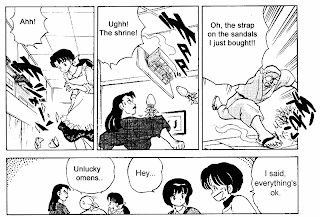
*If a kamidana (miniature Shinto shrine) falls it is an omen that a bad thing is, or will, happen.
*Breaking a comb or the cloth strap of a geta breaking is an omen of misfortune.
 *Stepping on the cloth border of a tatami mat brings bad luck.
*You should never write a person's name in red ink, unless your trying to curse them.
*The crow is considered an evil omen and bearer of bad luck. Loud crowing or the gathering in large numbers is a sign of disaster, particularly in the evening. The thing is not all crows are considered bad luck, some crows are viewed as the messengers of the kami, a single crow cawing at 6 am and noon is good luck, and it is thought that crows take care of aged parents.
 *If a funeral car passes you should hide your thumb. The reason for this is because the Japanese word for thumb literally translates as "parent-finger" and hiding it is considered safe guarding your parent.
*It is thought that if you give someone your cold it will cure yours. It is also thought that stupid people don't get colds hence Ranma's comment about not thinking Tatewaki Kuno could get one.

*If you cut your nails at night, you will not be with your parents when they die.
*If you whistle in the night, a snake (or a thief, or a ghost) will come to you.
Many Japanese superstitions show up in the Ranma manga, as the above pictures show. Knowing the superstitions, is somewhat helpful when reading manga or watching anime, since some are clearly foreshadowing, and/or an explanation for persons actions. Knowing them can give you an idea as to where the author got the idea from.
*It is thought that when someone sneezes (Kushami), someone is talking/gossiping about that person. Additional comment - In Japan when a person sneezes it is not common to say god bless you, bless you, or Gesundheit.

*If a kamidana (miniature Shinto shrine) falls it is an omen that a bad thing is, or will, happen.
*Breaking a comb or the cloth strap of a geta breaking is an omen of misfortune.

*You should never write a person's name in red ink, unless your trying to curse them.
*The crow is considered an evil omen and bearer of bad luck. Loud crowing or the gathering in large numbers is a sign of disaster, particularly in the evening. The thing is not all crows are considered bad luck, some crows are viewed as the messengers of the kami, a single crow cawing at 6 am and noon is good luck, and it is thought that crows take care of aged parents.

*It is thought that if you give someone your cold it will cure yours. It is also thought that stupid people don't get colds hence Ranma's comment about not thinking Tatewaki Kuno could get one.

*If you whistle in the night, a snake (or a thief, or a ghost) will come to you.
Many Japanese superstitions show up in the Ranma manga, as the above pictures show. Knowing the superstitions, is somewhat helpful when reading manga or watching anime, since some are clearly foreshadowing, and/or an explanation for persons actions. Knowing them can give you an idea as to where the author got the idea from.
Sunday, January 11, 2009
Insults via gestures in Japan

A question I recently received via email is: Ranma is frequently sticking up his middle finger, does it mean the same thing in Japan as it does in the US? Several people have also come to this blog, according to statcounter, to find out what hand gestures are negative in Japan.
Ranma is insulting the person who he shows his middle finger to but it is just an insult in Japan. It does not have the sexual connotations or the severity that it does in the United States. A judge in Japan even ruled that the sign of raising the middle finger with the back of one's right hand down is recognized in Japan as an act signifying insult or provocation. The use of this gesture is not as common in Japan as it is in the US.
Some insulting/rude body gestures in Japan:
-Showing the soles of your feet demonstrates disrespect, exposing the lowest and dirtiest part of your body is insulting.
- Spread fingers slightly apart and tuck the thumb into the palm while thrusting your hand into your target’s face is very insulting. It roughly means animal and was used primarily on Koreans.
-Inserting the thumb between index finger and middle finger, in imitation of the clitoris, is the sexual connotation that the middle finger has in the USA.
-Passing an item to someone with one hand is very rude in Japan, two hands should be used when passing things.
-Form a circle with fingers to indicate O.K. - means okay in the USA. In Japan it means money and depending on the context asking for money would be rude.
-Tugging at the eye, often accompanied by sticking out one's tongue, is a childishly offensive gesture.
-there are more.
For non insulting body language see this post: Japanese Body Language which links to a site that explains some Japanese body language.
Sunday, December 21, 2008
Gift giving in Japan
The Japanese give gifts very often, not only because they want to but because of giri (loosely means social obligation). This is not uniquely Japanese, many cultures and people feel they have to give gifts to certain people on holidays/birthdays, particularly if the person had given them a gift.
Some gift giving etiquette (these are generalities since some people will be more informal):
-Give gifts with both hands. Giving a gift with one hand out front and another to the side or behind your back show a lack of intimacy or sincerity.
-Take some time thinking about how much to spend on the gift. Don’t want to spend too much making the person feel socially obligated or spend too little and insult them.
-It is customary to initially refuse offered gifts a few times. The giver of the gift will insist that you take the gift anyway. This is a common verbal dance that everyone knows how will end (you accepting the gift).
-People when given a gift will often put the gift to the side without opening it. This is done to save face, if the gift does not meet the standards or expectations of the receiver, thus preventing embarrassment.
-Purchased gifts are generally preferred to homemade, since homemade are usually considered cheaper.
-How the gift is wrapped is in many ways more important than the actual gift. Very few people wrap the gifts themselves instead have it wrapped by a professional or have it in a department store bag.
-If given a gift, give a gift in return.
-If giving a personal gift, do it one on one not when in a group.
Some gifts not to give:
-Anything in four parts/set of four since the word for four is the same as the word for death (shi).
-Avoiding nine is a good idea as well since it is a homophone for suffering.
-Combs. The word for comb is Kushi which when broken apart means suffering (ku) and death (shi).
-Green Tea. Generally not a good idea since is used at funerals and memorial services.
-Clothes that touch the skin to the elderly, is considered an intimate gift.
Gifts are given for many reasons, here is some (list is incomplete):
Temiyage: Gifts given to say thank you or sorry.
Omiyage: Souvenirs. It is customary to bring back souvenirs for coworkers/family when you go on a trip. The reason for this is to assuage the shame of leaving to take a vacation/trip. These are also the gifts you would give to someone when you visit someone’s home for the first time. It is impolite to not give a gift when visiting someone’s house (called tebura -meaning empty handed).
Hikkoshi Aisatsu: Gifts given when moving into a building or neighborhood by the newcomers to introduce themselves. Traditionally this was a dish towel. Though more commonly nowadays some type of sweet like cookies or rice cakes are given instead.
Osenbetsu: Farewell gifts given to people who are leaving town or departing from a job. The most common gift is cash. A thank you card is generally expected in return.
Go Nyu-gaku Iwai: Gifts given to children who are entering a new school. Most common given gifts are school related ones like books.
Omimai: Gifts given when visiting someone in a hospital. Most commonly given gifts are cut flowers and books. Do not give plants with roots since it symbolizes a long stay or camellias which remind people of death.
Go-Kekkon Iwai: Wedding gifts. Usual gift given to the newlyweds is cash, preferably crisp new bills since they symbolize the couple's new life together. The person throwing the wedding gives a bag of gifts to the guests as well.
Go-Shussan Iwai: Gifts for healthy newborns. The gift is usually given a week after the babies birth and is usually things like clothing and toys. If the baby is not healthy it’s a good idea to wait to give them the gift until the baby is healthy. In return the parents of the baby will give a small gift usually something like a cup with the babies name on it.
Ososhiki: Funeral gifts. Guests usually bring money, old used used bills to symbolize being unprepared, and are given a gift in return.
Oseibo and Ochugen
 Oseibo is a custom of presenting a gift to an indebted person (co-workers, bosses, relatives, match maker, teachers, friends, etc…) at years end (usually between December first and December twentieth).
Ochugen is like Oseibo, except it is mid-year commonly given around July fifteenth. The celebration of Chugen maybe older than Oseibo. Ochugen comes from Taoism with July 15 being a ceremonial day of Taoism, it is also a day of Obon of Buddhism. The Taoism was gradually mixed with the Buddhism, and people came to distribute the gift to the vicinity and the close relative. That present was originally the one offered to the dead at Bon Festival. The old Chinese myth that made this a celebratory day in Taoism is about a god who was born on July 15. The god loved people and forgave their sins, people celebrated the god by setting a fire all day long and donating some gifts.
The most popular presents to give on Oseibo and Ochungen are Sanchokuhin. Sanchokuhin are items sent directly from the production shop or factory. Stores in Japan have made gift giving very easy, promoting Sancokuhin. The stores put up lots of displays and the customer then chooses the item/items they want and the store will have it delivered to any address in Japan. Generally the types of gifts are meat or fruits, dry food or kitchen items in bulk or basically anything that can be eaten or serves a practical purpose in any household. Generally the gift giver shouldn’t give decorative items or souvenirs. The reason for that, is so that if you get a gift that you don’t like or won’t use you can give it to someone else. Some housewives in Japan have made this passing on gifts into an art form, buying almost no presents instead give out the gifts they’ve received. Though they have to be careful to not give the same gift to the person they got it from.
It is thought that Oseibo, the year-end gift, is more important than Ochugen (midyear present). Part of the reason for this is that it coincides with company employees receiving a special bonus in addition to their monthly salaries. Average amount spent per gift is around 5000 yen (though this varies greatly on who your giving the gift to -bosses tend to be given better gifts, how obligated you feel to the person, your budget, etc…)
Oseibo and Ochugen gifts are usually wrapped in noshi (pictured above).
Monday, December 15, 2008
Hanetsuki
 A New Years game in Japan played by girls, which is becoming less popular over time, is hanetsuki. The game is somewhat similar to badminton or shuttlecock except there is no net. The game is played with a rectangular wooden paddle, called a hagoita, and a shuttlecock, called a hane (pictured above). There are two common variations of this game.
Tsukibane: one person attempts to keep the shuttlecock aloft as long as possible.
Oibane: Two people batting the shuttlecock back and forth.
In the two person version girls who fail to hit the shuttlecock get marked on the face with India Ink. Traditionally, the longer the shuttlecock remains in the air, the greater protection from mosquitoes the players will receive during the coming year.
Some history on the game:
The game dates back to at least 1433 AD. The game was originally a game for nobles played by both males and females. Over time guys stopped playing and it became a girls only game. As more time passed 19th century children started playing with the woman. Which brings us to the current time period where the game is no longer very popular.
The hagoita are very popular though, with people collecting them. The unusual shape of the hagoita plus the many different decoration of them make it a popular and desirable form of Japanese art. In the middle of December, the Hagoita Market is held at Sensoji Temple in Asakusa, Tokyo, where hagoita are sold at numerous stands. The paddles come in different sizes (ranging from really small to too large to ever play the game with, some over 4 feet), and most of them feature portraits of kabuki actors and beautiful Edo ladies. Though they also have many other designs like celebrities and popular culture (things like Harry Potter and Hello Kitty).
Friday, December 12, 2008
Birthday in Japan
The Japanese do not have any special birthday celebrations. Birthdays in Japan are now celebrated almost exactly the same as they are in the United States. People give the person with a birthday some gifts or a birthday card. A birthday cake is often given with birthday candles and people sing "Happy Birthday to You" - in English. That song is one of the most well known songs in the world. I've seen it sung in many movies in which not even one person spoke English (trivia -that song is copyrighted and will be, under current laws, until 2030; it makes around 2 million dollars a year on royalties).
Prior to the 19th century, the Japanese used a solar-lunar calender. The way in which peoples age were determined was strange. At birth the child was considered 1 year old and then on New Years day (which was later in the year than January first is now) the child would become two. Here is an example, child born in what is now November would become two on New Years day. This is in part why New Years day is the biggest holiday in Japan. Birth dates and ages are now determined the way they are in the USA (on actual birthday and first anniversary of that day child is one).
Some ages have special meanings and rituals or are milestone ages.
Shichi Go San -Seven Five Three
The ages of three and seven for girls and five for boys are milestone ages. The numbers three, five, and seven are considered to be lucky according to Japanese numerology so these ages are considered important in a persons life. Shichi-Go-San festivals are held every year on November 15th of every year.
Seijin No Hi - Coming of Age
Twenty years old is a major day for everyone. When a person is twenty they become legal adults and are given many rights like buying alcohol, getting married without parental consent, entering legal agreements, etc. On the second Monday of January festivals for people becoming twenty are held across Japan.
Yakudoshi - Calamity Years
There are some years that people in Japan believe are times of calamity (called yakudoshi). In these years is is believed that people are likely to experience misfortunes or illness. It is generally believed that men's yakudoshi are the ages 25, 42 and 61, and for women 19, 33 and 37, though there are local and historical variations. The ages of 42 for men and 33 for women are considered to be especially bad and are called honyaku (great calamity). The reason these years are considered particularly bad probably has to do with how those number can be pronounced. 42 can be pronounced "shi-ni" which is a homophone of the word "to death," and 33, when pronounced as "sanzan" means "hard", "terrible", or "disastrous". It is a common practice to go to a Shinto shrine and have an exorcism (yakubari) to prevent bad luck. The year before yakudoshi, called maeyaku, and the year after, called atoyaku are also considered bad luck.
Kanreki or Honkegaeri
Either term can be used. Kanreki means return calender. Honkegaeri means return to one's birth sign. Men celebrate kanreki on their 60th birthday. The traditional calendar was organized on 60-year cycles. The cycle of life returns to its starting point in 60 years, and as such, kanreki celebrates that point in a man’s life when his personal calendar has returned to the calendar sign under which he was born. The celebration of this feat has been popular since the Edo period, and because it is connected to the idea of rebirth, it is customary to give the celebrant a red cap, a seat cushion, and a chanchanko vest similar to those they used as a newborn.
Ga No Iwai (or Toshiiwai)
Ga no iwai is a Japanese rite of passage celebrated at various ages to pray for long life. Since at least the sixteenth century, ga no iwai has been celebrated when one turns sixty (kanreki) seventy (koki), seventy-seven (kiju), eighty (sanju), eighty-one (hanju), eighty-eight (beiju), ninety (sotsuju), ninety-nine (hakuju), one-hundred (jōju), one hundred and eight (chaju), and one hundred and eleven (kōju).
Sunday, December 7, 2008
Suika-wari
Suikawari (watermelon splitting) is a somewhat popular summertime game held at beaches, festivals, and picnics.
The most common way it is played is: A watermelon is laid out, sometimes on a tarp, and participants attempt to smash it open. Each is blindfolded, spun around three times, and handed a bokken to strike with. The first to crack the watermelon open wins. After it is broken the chunks of watermelon are shared among participants.
This shows up fairly often in manga and anime, for example, in the Ranma manga there is a beachside battle version of this and in Azumanga Doiah Tomo wants to break the watermelon with her hand via a karate chop.
Kingyo-Sukui - goldfish scooping

Kingyo-Sukui is a traditional childhood game played in Japan since the seventeenth century, though it's modern incarnation didn't appear until around 1910. The game is played by attempting to catch goldfish in a tank with a net. The net, called poi, is made of a handle with a loop of wire and paper over the loop. The game is pretty difficult and takes some skill because once the paper gets wet it breaks under the goldfish's weight. Goldfish are not always used sometimes they are substituted with other things like balls or turtles.
This game is most often played at stalls during summer festivals and is not a competition. Participation typically cost around 100 - 500 yen and players get to keep the scooped goldfish (they are given a bag to carry them). Generally the person playing keeps playing until their pois are broken. If the player is incapable of capturing a goldfish, the shopkeeper will often give them one anyways. The shopkeeper can alter the rules if they want to. Some shopkeepers will give a stronger poi if given more money or offer prizes, other than goldfish, to people who catch a lot. Some shopkeepers will rig the games, there is a reason that the Japanese call carnival games kodomo-damashi (which means cheating the kids/ tricking the child). That said, there is a national gold fish catching league as well that has very specific rules and championships.
Here is a link to a Javascript based goldfish catching game, even on easy it is not very easy: KingyoSukui
This game is seen in many manga and anime. In the above picture, taken from the Ranma manga, Ranma playing this game leads to him being able to master the Amaguriken technique.
Wednesday, September 3, 2008
Kanpó
In Japan, Chinese herbal medicine is called kanpô. A doctor of Chinese style medicine is called kanpô (or kampó). He prescribes herbal medicines and practices some traditional Chinese treatments like the ones listed below.
Anma - Massage treatment. It eases muscle aches, stimulates blood circulation, soothes nervous tension, etc., thus giving relief from fatigue and minor pains.
Shiatsu - Is finger pressure therapy. Using the fingers, especially the thumb, at specific points of the body called tsuba (acupuncture points) to stimulate the circulatory system and nervous system to work better.
Kyu - Moxibustion
A medical treatment in which cones of moxa are placed on acupuncture points and ignited. Moxa is made from the hairs that grow under the leaves of mugwort. This treatment is believed to help cure illness by restoring a proper balance of ki and is very similar to acupuncture.
Hari- acupuncture
Inserting needles into the body to aid the proper balance of ki to ensure good health. Came from China to Japan in the 6th century. They use extremely fine needles several centimeters long. They insert them into the skin and underlying tissues along specific meridians to reach certain points called tsubo connected to the pain. The needles are so fine that they are rarely even felt by the patients. Require a license to practice.
In the Ranma manga Dr Tofu is a kanpó. Many of the traditional Chinese healing techniques mentioned above are seen in the Ranma manga though usually not for healing purposes. Ranma uses massage on Akane when she is angry, offered Nabiki one to repay destroyed ticket, and on the Ashura to relieve her back pain. Happosai used a moxibustion to take away Ranma's strength. Cologne used shiatsu to make Ranma more susceptible to heat, Shampoo used a shiatsu to control Akane, Ranma hit a tsubo point in Ryoga to knock him out, etc.
Friday, August 29, 2008
Meinichi - Death Anniversary

Meinichi is the Japanese term for the anniversary of some ones death. This custom is observed in several Asian cultures besides Japan.
When celebrated every month it is called tsuki meinichi. It is usually held on the day of the month the person passed away. For example, the Vista Buddhist Temple holds Shinran Shonin's Tsuki Meinichi Hoyo on the second Wednesday of every month to commemorate the day the Shonin passed away which is the 16th.
Shotsuki meinichi originally referred to the first year memorial date. Though, overtime the term gradually became used to refer to the month (and often the day) the person passed away. The shotsuki meinichi became the yearly service held in the memory of the deceased. For example, Shinran Shonin's sho-tsuki meinichi is commemorated every year in January. However, because Shinran Shonin is the founder of Jodo Shinshu Buddhism, the followers of Jodo Shinshu give a special name for the Shonin's shotsuki meinichi and call it the Goshoki Ho-onko. Temples in Japan still may use the Lunar Calendar, and because of that Shinran Shonin's shotsuki meinichi (Ho-onko) is also celebrated during the months of October or November.
Common ways of celebrating meinichi are praying, visiting the grave site, and placing items on the household alter. Meinichi while sad because it is remembering a loved one is also a joyous occasion. Shotsuki's literal meaning is joyous month. The literal meaning of meinichi is life (mei) date (nichi). While it is to honor and to pay respects to family members and friends who have passed away, it is mainly for the living. Death anniversaries are associated with several religions, in Japan it is primarily associated with Buddhism.
This can be seen in the Ranma Manga volume 22 where they go to Miss Tendo's grave site on the anniversary of her death. The picture at the top of the post is from the manga while they are observing meinichi.
Tuesday, August 19, 2008
Miko - Shrine Maiden
 Miko are shrine maidens (for lack of a better term) who act as supplementary priestesses found at Shinto Shrines. Miko offered prayers to the deities and were oracles. In the past shrine maidens performed the sacred kagura dances of dedication to the deity to bless worshipers. Miko in the past were said to have the power to communicate with the spirits of the dead and with the shrines deity. Since they were messengers of the kami they were often powerful figures and some times even rulers. In the 1930's, with the rise of State Shinto (mouthpiece for the militarist regime), Miko were banned on the grounds that they made Japan look foolish and superstitious. After the end of World War II, they have made a comeback continuing the practices they've been doing for ages.
Modern day Miko's are often the daughter of the priest who presided over a given shrine. Though a lot of miko are part-time employees or volunteers. Their duties include assisting with shrine functions, performing ceremonial dances, offering Omikuji (a type of fortune telling), and staffing shrine shops.
Miko are not priestesses. Shinto doesn't have priestesses. They do have female priests though. Miko do not have the same degree of authority as that of an actual priest, although they can serve as the senior cleric of a shrine if no priest is available. Quite often, upon being married, Miko either quite or begin training for priesthood.
The traditional clothing for miko consists of hibakama (a type of hakama, leg covering -usually red), a kimono shirt, and tabi (socks usually white with a separation between the big toe and other toes). Occasionally miko wear a thin white haori called chihaya (a long-sleeved top). The kimono shirt has long, wide sleeves and is always white, as white is a symbol of purity. They will often wear white or red ribbons in their hair.
In fiction Miko often have martial arts abilities and the ability to do magic of various sorts, especially o-fuda and various forms of divination.
In Sailormoon one of the characters, Rei-Sailor Mars, is a miko. She has divination ability via a sacred fire and one of her attacks is to power up an o-fuda and say the mantra "Rin, pyou, tou, sha, kai, jin, retsu, sai, zen. Akuryou taisan!". What she is doing is the kuji-in (Nine Syllable Seals). Technically the word "Kuji-in" refers only to the hand postures (mudra) and their related incantations (mantra). The related practice of making nine cuts--five horizontal and four vertical, alternating--in the air with the finger or on paper with a brush is known as "kuji kiri," nine syllable cuts. In Japanese folk-magic and Onmyodo, the nine cuts are often made over writing or a picture, to gain control of the object named or pictured. Thus, a sailor wishing to be protected from drowning might write them over the kanji for "sea" or "water". The Kuji-in practice symbolizes that all the forces of the universe are united against evil; because of this, it was often used by the common people for luck when traveling, especially in the mountains. Amatsu Tatara means "Sky Harbour", or more literally Divine Residence/God's Portis. It is also the highest and oldest scroll of martial arts and Shinto spirit, dating back to 7BC.
The above picture is taken from the Ranma manga. Akane, Ukyo, and Ranma are volunteer miko.
Friday, August 15, 2008
Bon Odori
During Obon, many regions in Japan have folk dances. These folk dances are called bon odori. The purpose of these dances are to, at the beginning of the Bon festival, welcome the spirits and at the end to bid them farewell. This tradition is said to have started in the later years of the Muromachi period. The kind of dance varies from area to area. People wearing yukata (summer kimono) go to the neighborhood bon odori and dance around a yagura stage. Anyone can participate in bon odori. Just join the circle and imitate what others are doing.
Bon Odori is said to originate from the story of Mokuren. Mokuren was a disciple of the Buddha, who used his paranormal powers to look upon his deceased mother. He found out that she had fallen into the Realm of Hungry Ghosts and was suffering. After seeing this he went to the Buddha and asked how he could release his mother from this realm. Buddha told him to make offerings to the many priests who had just completed their summer retreat, on the fifteenth day of the seventh month. Mokuren did this and, thus, saw his mother's release. He also began to see the true nature of her past unselfishness and the many sacrifices that she had made for him. He was so happy because of his mother's release and grateful for his mother's kindness so he danced with joy. From this dance of joy comes Bon Odori, a time in which ancestors and their sacrifices are remembered and appreciated.
A typical Bon dance involves people lining up in a circle around a high wooden scaffold made especially for the festival called a yagura. The yagura is generally also used as the bandstand for the musicians and singers of the Obon music. Some dances proceed clockwise, and some dances proceed counter-clockwise around the yagura. Some dances reverse during the dance, though most do not. At times, people face the yagura and move towards and away from it. Still some dances, such as the Kagoshima Ohara dance, and the Tokushima Awa Odori, simply proceed in a straight line through the streets of the town.
The dance of a region can depict the area's history and specialization. For example, the movements of the dance of the Tankō Bushi (the "coal mining song") of old Miike Mine in Kyūshū show the movements of miners, e.g. digging, cart pushing, lantern hanging, etc. All dancers perform the same dance sequence in unison.
Several different implements maybe used during the dances and vary by region. Some dances involve the use of different kinds of fans, others involve the use of tenugui (small towels) which may have colorful designs. Some require the use of kachi-kachi (small wooden clappers) during the dance.
The music can be songs specifically pertinent to the spiritual message of Obon, or local min'yo folk songs. Hokkaidō, or northern Japan, is known for a folk-song known as "Soran Bushi." The song "Tokyo Ondo" takes its namesake from the capital of Japan. "Goshu Ondo" is a folk song from Shiga prefecture. Residents of the Kansai area will recognize the famous "Kawachi ondo." Tokushima in Shikoku is very famous for its "Awa Odori," or "fool's dance," and in the far south, one can hear the "Ohara Bushi" of Kagoshima, Kyūshū.
Thursday, July 31, 2008
Tanuki

Tanuki, Nyctereutes procyonoides, are mammals of the Canid family (dog) that somewhat resembles a raccoon. They are native to China, Korea, Japan, and southeastern Siberia. The average adults head and body length is around 65 cm. Their weight ranges from 4 to 10 kg. The average litter size for them is greater than 15 pups. Average litters are large, up to 15 or more pups. They generally only live 3–4 years in the wild but have lived up to 11 years in captivity. They are omnivorous. They mate for life, are not territorial, climb trees, and do not bark. The Japanese variety maybe a separate species from the others according to recent genetic testing. Maybe an isolationist species.
In Japanese mythology, Tanuki are thought to be mischievous and jolly, a master of disguise and shapeshifting, but somewhat gullible and absent-minded. A common trick Tanuki do on humans is to try to con humans with leaves turned into banknotes.
Statues of them can be found in many places like shops or temples. They are often depicted wearing a straw hat and holding a gourd bottle of sake and a note promising payment. Most are also fat. In the past they were depicted with having very large ball sacks, because the actual animal has very large ball sacks. Newer statues generally do not display the large ball sacks.
The animals are hunted fairly frequently. The Japanese used to use their skins in metalworking for thinning gold. 11% of all the animals hunted in Japan are raccoon dogs (an alternative name for them because they look kind of like raccoons). According to the Humane Society of the United States, 70% of fur garments they tested were raccoon dog but were mislabeled as fake/faux fur, coyote, rabbit or other animals at 20 retailers in the USA.
These often appear in anime and manga. The Ranma manga has many Tanuki statues, it's one of the things Ranma most often switches place with when he uses the ninja trick of replacing himself with something else. The movie Pom Poko is about Tanuki and is one of my favorite movies. The movie has a very good and well done message about not destroying animal habitats.
Wednesday, July 16, 2008
Some Japanese Dining Etiquette
- In Japan before people eat they say "itadakimasu" ("I gratefully receive"), and after they finish eating they say "gochisosama (deshita)" ("Thank you for the meal").
-It is polite to wait until everyone is served before you start eating.
-Blowing your nose in public, and especially at the table, is considered bad manners.
-Unlike in China, where you are supposed to leave some food on your plate to show you have gotten enough food, in Japan it is considered good manners to empty your dishes to the last grain of rice.
-In many parts of East Asia, it is not rude to burp while eating, even is considered a compliment. In Japan though it is considered bad manners to burp.
-After finishing eating, it is good manners to move all the dishes that you used back into the same position they were at the start of the meal.
-A second helping of rice or soup may be served on a separate tray by the host. The guests are expected to accept the bowl with both hands, taking care to put it down on their trays once before beginning to eat from it again.
-Rather than being bad manners, as most of the western world is generally taught, slurping soup and noodles is considered evidence of enjoying the meal, particularly for males. Mothers will even occasionally tell their male children to eat more noisily, like a man. Considering that spoons often aren't given for eating soup and Asians serve soup hot it would be hard to eat it quietly even if you wanted to (slurping cools the soup/noodles down).
-It is uncommon for napkins to be given at Japanese meals, you should bring a handkerchief or some tissues with you.
For more see my post on Hashi (Chopsticks).
Subscribe to:
Posts (Atom)